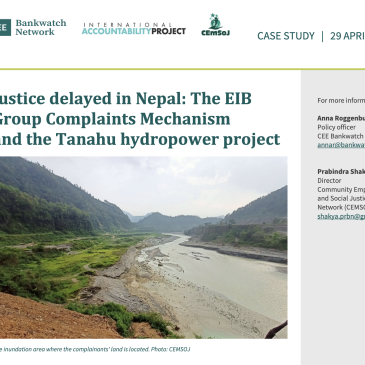
The European Investment Bank (EIB) co-financed Tanahu hydropower project in Nepal has impacted Indigenous Magar and other communities against the Bank’s environmental and social standards. Communities impacted by the project’s inundation have filed complaints with the EIB Group Complaints Mechanism (EIB-CM) – without success.
Here’s what has happened:
Between 2020 and 2021, affected communities raised concerns about, among other things:
- lack of information and consultation
- inadequate consideration of Indigenous Peoples’ rights and free, prior and informed consent
- poor compensation for homes, land and livelihoods.
The dispute resolution process lasted two years before the promoter withdrew without addressing the issues. Meanwhile, the project continued.
In March 2024, the EIB adopted a list of requirements for the project, with the EIB-CM expected to produce a compliance review report.
But by early 2026, there had still been no updates on remedial actions, additional requirements or the compliance investigation.
The EIB-CM is currently undergoing review. As the EIB drafts its new policy for the CM, it must learn from projects that have harmed people and the environment – cases where the mechanism failed to deliver justice. The EIB-CM review is a chance to ensure complainants are heard – and that its recommendations actually lead to action.
We’re calling for urgent reform. A strong grievance mechanism is key to protecting human rights and promoting climate justice.
Click here to read our latest case study with CEE Bankwatch Network and International Accountability Project for more recommendations for the EIB-CM policy review.